
The faster-than-expected rise in interest rates by the US Federal Reserve (US Fed) shook global financial markets in early 2022. And now the ongoing war between Russia and Ukraine has lifted commodity prices, with Brent crude oil hitting a 14-year high of $139 a barrel in intraday trade. All these developments have sent the equity markets across the world into a tailspin.

Gujarat and Karnataka have been ranked as the best performers in developing startup ecosystem for budding entrepreneurs, according to the ranking of states and Union territories by the Department for Promotion of Industry and Internal Trade (DPIIT). Among smaller states having population of less than one crore, Meghalaya has been adjudged as the best performer. The rankings are based on the initiatives taken to develop the startup ecosystem for promoting budding entrepreneurs.

To further strengthen the supervision on non-banking entities (NBFCs), the Reserve Bank on Tuesday issued revised guidelines on a Prompt Corrective Action (PCA) framework for such companies, excluding government-owned ones, effective from October 1, 2022, on the lines of what it had introduced for banks in 2002. The RBI came up with stricter supervisory norms under the PCA framework for banks after their bad loans mounted and balance-sheets bled badly. This involved restricting them from fresh lending, brand opening and, hiring, among others. The RBI said the revised PCA framework is also applicable to all deposit-taking non-banking financial companies (NBFCs), all non-deposit taking NBFCs in the middle, upper and top layers, including investment and credit companies, core investment companies, infrastructure debt funds, infrastructure finance companies and microfinance institutions.

Dr Uday Salunkhe, Group Director, Welingkar Institute Of Management Research And Development suggests nine key factors every student must take into consideration before deciding on a business school.

'The recent correction in indices has made the markets cheaper to invest for the long term.'
Xavier Labour Relations Institute, Jamshedpur, invites applications for XAT, its admission test, and admissions to the academic programmes at XLRI and 35 other management institutes.
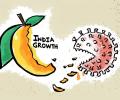
The Reserve Bank on Wednesday retained the GDP growth forecast at 9.5 per cent for the current fiscal but cautioned that the economic recovery is not yet strong enough to be self-sustaining and durable.

More cos could join the likes of Burger King and Antony Waste in giving listing another shot.

'Who you know today will determine who you know tomorrow.' 'Becoming an expert in your domain will incentivise others to have you in their networks.' 'And the more diverse your network, the better it is.' An enlightening excerpt from Ambi Parmeswaran's All The World's A Stage: A Personal Branding Story.

India's real estate industry staged a rebound from 2020's downturn, with housing sales seen rising by over 50 per cent. The performance, though short of pre-COVID levels, has property developers hoping for stronger gains in the New Year and the beginning of a long upcycle. A strong foundation has been laid this year for revival in the Indian real estate sector, which is projected to reach $1 trillion mark by 2030 from $200 billion in the pre-pandemic year.

On February 19, India's largest private low-fare airline IndiGo announced the resignation of one of the two founders, Rakesh Gangwal, from the airline's board and his intentions of offloading his stake in the airline over the next five years. The announcement came on a Friday, giving the stock markets the weekend to absorb the news but the markets registered a tepid response on Monday's opening. In contrast, in July 2019, when the fight between the two founders and erstwhile friends first became public, the markets reacted savagely. The IndiGo scrip at the time fell 19 per cent, wiping out millions of rupees of shareholder wealth before bouncing back. For readers who may be hazy on the details of the dispute, here is the context.

Unless you know what you are and what you are not, how will you get an appropriate job?

The most important step is delivering what is needed -- a fairer IPO pricing, notes Debashis Basu.

The Netherlands has emerged as India's fifth-largest export destination in 2021-22 (FY22), jumping from its 10th position a year ago. Exports to the fifth-largest economy in the European Union (EU) bolted 94 per cent to $12.5 billion in the financial year ended March 31. In FY22, the Netherlands surpassed Hong Kong, Singapore, the UK, Germany, and Nepal to become India's largest export destination in the EU. Germany, which was earlier India's top European export destination (eighth position), has now dropped two ranks to 10th place.

There is money to buy the central public sector enterprises, but buyers will need a firm assurance that the disvestment programme will keep environment issues front and centre of their corporate plans.

The Budget kept away from mood dampeners such as an increase in taxes (capital gain taxes) and even the much-feared introduction of Covid cess and wealth taxes, says Nimesh Kampani, chairman, JM Financial.

The departing directors had criticised the club's handling of a social media scandal and expressed doubts about the board's ability to handle the implications of the COVID-19 pandemic, which has led to a 70% players' pay cut.

'An international survey has shown that India figures high in the list of countries on people's approval of torture.' 'What is surprising is that even if you look at the many vibrant social movements we've had, there's been no campaign that predominantly focuses on police torture.'
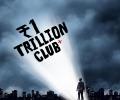
The Adani group has the maximum number of companies in the trillion club at five, followed by the Tata group (four).

Corporate India lags the rest of its Western and Asian peers by a wide margin when it comes to the presence of women on their boards, with just 17.3 per cent of the large companies having them on their key decision making bodies, an international report said on Tuesday. However, this is a near 6 percentage points improvement between 2015 -- when it was only 11.4 per cent -- and 2021, Swiss brokerage Credit Suisse said in the report, which covered over 33,000 executives from more than 3,000 companies across 46 countries, including over 1,440 firms across 12 Asia-Pacific markets. Female representation on boards of large Indian companies has increased by 5.9 percentage points from 11.4 per cent in 2015 to 17.3 per cent in 2021.

It's raining IPOs, with eight issues hitting the market in a span of six days. However, the pace of new filings points to a deluge during the latter part of the year. So far this year, 58 companies have filed their draft red herring prospectus (DRHP) with the market regulator for initial public offerings (IPOs), exceeding the combined tally of 50 in the last two years. Industry participants said the filing count could cross 100 this year, setting a new benchmark in terms of amount mobilised in a calendar year.

Merely bringing down the government stake below 51% may not find any taker for the PSBs. The government must bring down its holding to at least 26%, recommends Tamal Bandyopadhyay.

RBI said a total of 8,707 frauds involving Rs 1 lakh and above were detected during 2019-20 involving an amount of Rs 185,644 crore.

After a stellar run that saw the frontline indices - the S&P BSE Sensex and the Nifty 50 - clock gains of around 21 per cent and 24 per cent respectively in calendar year 2021 (CY21), the year gone by in real sense belonged to the mid-and small-cap segments. Thus far in CY21, the mid-and small-cap indexes on the BSE have far outpaced the run in the frontline indices and notched up a gain of around 38 per cent and 61 per cent, respectively during this period. Though analysts expect the outperformance to continue in 2022, they caution against the multiple headwinds in the year ahead that may dent the overall market sentiment.

Industry players estimate the average payouts to be in the range of 50-75 per cent of the bankers' annual salaries. For the top performers, the bonuses could be 100-125 per cent.
The expected interest rate hike in the US and the resultant volatility in the domestic secondary market could play a dampener to the over Rs 2-trillion initial public offering (IPO) pipeline in 2022. IPOs in 2022 look promising, with as many as 35 companies holding the Securities and Exchange Board of India's approval to raise roughly Rs 50,000 crore. Another 33 companies are waiting for the regulator's nod to raise around Rs 60,000 crore next year.

'Hybrid learning is the future, and test prep is a big segment within the entire education space in India.'

Reading books will make you curious, build your imagination and nourish your brain into an organic super power.

'This is happening regardless of the Budget.'

Reserve Bank of India (RBI) deputy governor M Rajeshwar Rao on Wednesday defended the central bank's decision of not allowing industrial houses to float banks, and said more deliberations are needed before RBI changes its stance on this issue agreed back in 2001. An internal working group (IWG) of the RBI had recommended allowing industrial groups into banking, but late last month the RBI said it kept on hold the two recommendations of allowing industrial houses and large non-banks to float banks. However, RBI had accepted 21 of the 33 recommendations of the group that submitted its report a year ago.

India maintained 43rd rank on an annual World Competitiveness Index compiled by the Institute for Management Development (IMD) that examined the impact of COVID-19 on economies around the world this year. The 64-nation list was led by Switzerland, while Sweden has moved up to the second position (from sixth last year), Denmark has lost one place to rank third, the Netherlands has retained its fourth place and Singapore has slipped to the fifth place (from first in 2020). At eighth, Taiwan reached the top-10 for the first time since the ranking began 33 years ago (moving up from 11th last year).

As the industrial era wanes, the network era looms, notes Ajit Balakrishnan.

Some of the firms that have witnessed major drop in analysts' coverage include Dish TV, YES Bank, and JSW Energy.

'For all of us at Amazon, it is 'Bharat first'.' 'We are keeping the Indian customer at the centre of what we are doing.'

'Institutional ownership, by December 2018, had increased 37.5% from approximately 22% in early 2009,' points out Amit Tandon.

The Centre is likely to privatise profit-making enterprises, reversing its previous position of first closing or merging loss-making state-run units. The NITI Aayog, which is in the process of selecting public sector units for privatisation, is likely to put out its first list, focusing on companies in non-strategic sectors, along with those that have got Cabinet approval for stake sale, or are in final stage of due diligence. "The shortlisted firms will be put out in three-four tranches, with the first list comprising non-strategic ones, followed by strategic sectors with a focus on privatisation and not divestment," said a senior government official privy to the plan. He said the first report was expected in early April. The think tank approach is in sync with the government's new strategies on privatisation and asset monetisation.

On this Teachers Day, I once again bow my head as I remember all the teachers who had taught me in school, college, military academy, army courses and so on. But Ms Shantha Potty Aunty, this one more head bow is specially for you, admirably says Colonel K Thammayya Udupa (retd).

'Banking is a business of trust.'
The Common Admission Test 2011 that qualifies admission to 13 Indian Institutes of Management commenced October 22, 2011. Take the poll and let us know what you think about the quality of CAT, IIMs and more.
